Glatiramer acetate, sold under the brand name Copaxone among others, is an immunomodulator medication used to treat multiple sclerosis. Glatiramer acetate is approved in the United States to reduce the frequency of relapses, but not for reducing the progression of disability. Observational studies, but not randomized controlled trials, suggest that it may reduce progression of disability. While a conclusive diagnosis of multiple sclerosis requires a history of two or more episodes of symptoms and signs, glatiramer acetate is approved to treat a first episode anticipating a diagnosis. It is also used to treat relapsing-remitting multiple sclerosis. It is administered by subcutaneous injection.
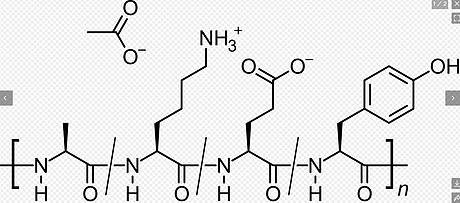
It is a mixture of random-sized peptides that are composed of the four amino acids found in myelin basic protein, namely glutamic acid, lysine, alanine, and tyrosine. Myelin basic protein is the antigen in the myelin sheaths of the neurons that stimulates an autoimmune reaction in people with MS, so the peptide may work as a decoy for the attacking immune cells.
Glatiramer acetate is indicated for the treatment of relapsing forms of multiple sclerosis (MS), to include clinically isolated syndrome, relapsing-remitting disease, and active secondary progressive disease, in adults.
A 2010 Cochrane review concluded that glatiramer acetate had partial efficacy in "relapse-related clinical outcomes" but no effect on progression of the disease. As a result, it is approved by the US Food and Drug Administration (FDA) for reducing the frequency of relapses, but not for reducing the progression of disability.

 ×
 首页

 我要采购
 我要供应
 我要推广
 我要投稿